
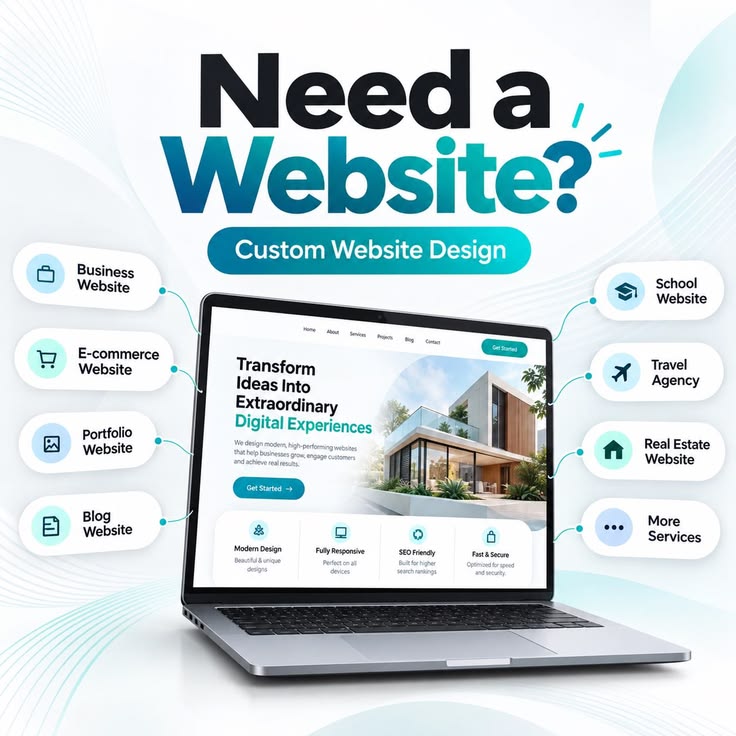
Website Design and Development in Kenya: Build Your Business Online with Softlink Options
Is your business ready to reach more customers online? In today’s digital world, having a professional website can help your business build credibility, showcase its services and attract potential customers.Website design and development in Kenya are two connected processes that help create a functional and professional website. However, a successful website needs more than an attractive appearance. It should also be easy to navigate, mobile-friendly, secure and designed around your business goals.
At Softlink Options, we help businesses and organisations establish their online presence through website design and development services. Whether you are launching a startup, improving an existing website or expanding your business online, choosing the right website solution can help you build a stronger digital foundation.
In this guide, we explain how website design and development work, why they matter and how Softlink Options can help your business take the next step.
What Is Website Design and Development?
Website design and development are two connected processes that help create a functional and professional website. Although the terms are often used together, each has a different purpose.
Website Design and Development in Kenya: A Complete Guide for Businesses
1. What Is Website Design?
Website design focuses on the appearance, layout and user experience of a website. In other words, it determines how visitors see information and interact with different sections.
For example, a business website may have a homepage, an About Us section, a services page, customer testimonials and a contact page. A website designer organises these elements to make the website attractive, professional and easy to use.
Important website design elements include:
- Layout: Organises text, images, buttons and other content.
- Colours and typography: Communicate the brand’s identity and improve readability.
- Navigation: Helps visitors find information quickly.
- Responsive design: Allows the website to adapt to different screen sizes.
- User experience (UX): Makes the website easier and more convenient to use.
Consequently, good website design helps visitors understand your business, navigate your pages and find the information they need.
2. What Is Website Development?
Website development involves building and implementing the features that make a website work. Depending on the project, developers may use website platforms, programming languages, databases and other technologies.
For instance, website development can include:
- Creating website pages and menus.
- Setting up contact and quotation forms.
- Integrating payment gateways where required.
- Developing online shops and product catalogues.
- Connecting databases and other business systems.
- Implementing security measures and testing website functionality.
For example, a school website may need an admissions enquiry form, while an online shop may require product listings, shopping carts and payment processing.
Therefore, website design determines how a website looks and feels, whereas development ensures that its features work as intended. Together, these two services create a functional and user-friendly online platform.
Why Does Your Business Need Professional Website Design and Development in Kenya?
A website can support your marketing, sales and customer communication. More importantly, it gives your business a dedicated online platform that you control. Therefore, investing in professional website design and development in Kenya can help your business establish a stronger digital presence.
1. Build Trust and Credibility
Potential customers often research businesses before making purchasing decisions. A professional website helps you present your services, contact details, business information and portfolio in an organised way.
As a result, visitors can better understand what your business offers before contacting you. Furthermore, regularly updated and accurate website information can help create a positive impression.
2. Reach Customers Beyond Your Physical Location
A physical shop or office mainly serves customers who can reach it. However, a website allows people to discover your business online from different locations.
In addition, with relevant content and search engine optimisation (SEO), your website can help potential customers find your services through search engines. Consequently, your business can reach audiences beyond its immediate geographical area.
3. Showcase Products and Services
A website provides space to explain your services, display product images, publish prices where appropriate and answer common customer questions.
Furthermore, a portfolio or project gallery can demonstrate your experience and help prospective customers evaluate your work. This makes it easier for visitors to understand what you offer before making an enquiry.
4. Generate Leads and Enquiries
Contact forms, quotation requests, phone links and WhatsApp links can make it easier for visitors to contact your business.
For example, a web design company can use an enquiry form to collect information about a customer’s project, budget and preferred features. Consequently, the business can understand potential clients’ needs and respond more effectively.
5. Support Your Digital Marketing Strategy
Your website can work alongside social media, email marketing, paid advertising and SEO.
Instead of relying only on social media profiles, you can direct interested customers to a website where they can explore your services in greater detail. Additionally, publishing useful articles can provide more opportunities for people to discover your business through search engines.
Nevertheless, a website does not automatically guarantee more sales. Results depend on factors such as website quality, audience targeting, relevant content and ongoing marketing.
Essential Features of Website Design and Development in Kenya
Before investing in website design and development in Kenya, consider the following features. These elements can improve the website’s usability, performance, accessibility and overall effectiveness.
Mobile-Friendly Design
Many customers browse websites using smartphones. Therefore, your website should adapt to mobile phones, tablets and desktop computers.
Text should be readable, buttons should be easy to use, and visitors should not need to scroll sideways to view essential content. In addition, responsive layouts help provide a more consistent experience across different devices.
Search Engine Optimisation (SEO)
SEO helps search engines understand your website and helps users discover relevant pages through search results.
Basic SEO considerations include descriptive page titles, useful content, clear headings, relevant keywords, meaningful image descriptions and logical internal links.
However, SEO does not guarantee a particular ranking or immediate traffic growth. Instead, it involves ongoing improvements that help search engines understand your content and users find useful information.
Fast Loading Speed
Visitors may become frustrated when pages take too long to load. Image optimisation, suitable hosting and efficient website implementation can help improve performance.
Additionally, testing your website on different devices and internet connections can reveal areas that need improvement. As a result, you can identify performance issues before they affect too many visitors.
Security and Data Protection
Websites that collect personal information should use appropriate security measures. These may include HTTPS, secure administrator accounts, software updates, access controls and reliable backups.
Furthermore, if your website accepts payments or stores customer information, its security requirements may be more extensive. Therefore, discuss the appropriate security measures with your website developer before launch.
Clear Calls to Action
A call to action (CTA) tells visitors what to do next. For example, common calls to action include:
- Contact Us
- Request a Quote
- Book a Consultation
- Shop Now
- Get Started
Strategically placed CTAs can make it easier for visitors to move from browsing to making an enquiry or purchase. Consequently, clear calls to action can support your website’s business objectives.
Easy Content Management
A content management system (CMS), such as WordPress, allows authorised users to update website content without manually editing every page’s code.
Depending on the solution, your team may be able to publish blog posts, update service descriptions, change images and maintain other website information. In addition, a user-friendly CMS can make routine website updates easier to manage.
Website Design and Development Packages at Softlink Options
Different businesses have different website requirements. For this reason, the appropriate package depends on your budget, the number of pages you need and the features your website must support.
Softlink Options lists the following website design packages on its website. However, the prices and inclusions below should be confirmed with the company before placing an order.
1. Starter Web Pack — KSh 15,000
This package is designed for businesses that need a simple online starting point.
It includes:
- One responsive landing page.
- Mobile-friendly design and SEO-ready structure.
- Contact form and five email accounts.
- One revision.
- Listed delivery period of 3–5 days.
Suitable for: Startups, freelancers and small businesses that need a straightforward online presence.
2. Pro Web Presence — KSh 25,000
This package offers additional pages and features for businesses that need to explain their services in greater detail.
It includes:
- Up to five custom pages.
- Modern design and SEO structure.
- Quotation and contact forms.
- Social media links.
- Ten email accounts.
- Two revisions.
Suitable for: Service providers, consultants and growing businesses that need separate pages for their services.
3. Business Expansion Site — KSh 45,000
This package provides more room for businesses with broader content and marketing requirements.
It includes:
- Up to ten pages, with an optional blog.
- Enhanced user experience and interface design.
- SEO and speed setup.
- Analytics.
- Fifteen email accounts.
- Three revisions.
Suitable for: Established businesses, professional firms and organisations that need a more comprehensive website.
4. Enterprise Web Suite — KSh 85,000
This package is intended for projects that require more pages and additional functionality.
It includes:
- Up to twenty pages.
- Payment integration options, including iPay and PesaPal.
- Live chat.
- Advanced SEO and forms.
- Twenty email accounts.
- Priority support and three or more revisions.
Suitable for: Businesses and organisations that require a larger website with payment functionality or additional customer interaction features.
Important: These are the prices displayed on the Softlink Options website design page. Nevertheless, confirm the current price, delivery time, hosting, domain registration, maintenance arrangements, payment integration costs and exact package scope directly with Softlink Options.
How Much Does Website Design and Development Cost in Kenya?
The cost of building a website depends on its size, complexity and required functionality. Generally, a simple informational website requires less work than an online shop or a custom business application.
Several factors influence the final price:
- Number of pages: Larger websites usually require more content and design work.
- Design requirements: Custom layouts and complex user experiences may require additional work.
- Website functionality: Booking systems, payment gateways and customer portals can increase development requirements.
- Content creation: Professional copywriting, photography and graphics may affect the total cost.
- Domain and hosting: These services may have separate renewal or subscription charges.
- Maintenance: Updates, backups, troubleshooting and ongoing support may involve additional costs.
Therefore, businesses should compare the full scope of each package rather than choosing a provider based on price alone. Furthermore, asking for a detailed quotation can help you understand what is included and identify any additional charges.
The Website Design and Development Process
Understanding the website design and development process helps you prepare the information your developer needs and set realistic expectations. Although the process may vary depending on the project, most websites follow these main stages.
Step 1: Identify Your Business Goals
First, determine what you want your website to achieve. For example, your goal might be to generate leads, sell products, promote services, share information or receive bookings.
Clearly identifying these goals helps the developer recommend suitable pages and features.
Step 2: Plan the Website Structure
Next, identify the pages and features your website requires. A typical business website may include Home, About Us, Services, Blog and Contact pages.
Additionally, planning the structure in advance makes it easier to organise information and create a straightforward navigation system.
Step 3: Create the Design
The design stage establishes the layout, colours, typography, images and navigation. These elements should reflect your brand and make information easy to find.
Consequently, a well-planned design can help visitors understand your business and interact with your website more comfortably.
Step 4: Develop the Website
After the design is approved, the planned pages and features are implemented. Depending on the project, this may involve a CMS such as WordPress, custom programming or third-party integrations.
For example, an online shop may require product pages, a shopping cart and payment integration. Meanwhile, a service-based business may mainly need enquiry forms and service information.
Step 5: Add Content and Optimise for Search
At this stage, the website receives its text, images, headings, page titles and other content. Furthermore, SEO considerations should be incorporated without sacrificing clarity or usefulness.
This includes using relevant keywords naturally, writing descriptive headings and adding meaningful image descriptions.
Step 6: Test the Website
Before launch, test the website on different devices and browsers. In addition, check forms, links, navigation, page speed and any payment or booking features.
As a result, testing helps identify problems that could affect visitors after the website becomes publicly accessible.
Step 7: Launch and Maintain the Website
After approval, the website can be published. However, the work does not necessarily end at launch.
Software updates, security checks, backups and content improvements help keep the website useful over time. Therefore, businesses should also plan for ongoing website maintenance.
Website Design vs Website Development vs Web Hosting
These services work together, but they solve different problems.
| Service | Main purpose | Example |
|---|---|---|
| Website design | Determines appearance and user experience | Layout, colours and navigation |
| Website development | Builds website functionality | Contact forms and payment features |
| Web hosting | Stores website files and makes them accessible online | Server space for your website |
| Domain registration | Provides the website’s address | yourbusiness.co.ke |
| SEO | Helps improve discovery through search engines | Optimised titles and useful articles |
For example, a business may have a beautifully designed website, but it still needs hosting to make the site available online. Similarly, a domain name alone does not provide a complete website.
In addition, SEO helps people discover relevant website pages through search engines, while development ensures that the website’s features function properly.
Softlink Options provides website design alongside other digital services, including web hosting and digital marketing.
Why Consider Softlink Options for Website Design and Development in Kenya?
Choosing a website provider involves more than selecting a package. Instead, you should consider the provider’s services, communication, technical capabilities and ability to understand your business needs.
Softlink Options presents itself as a cloud services and web development provider serving local and international customers. Furthermore, its website lists website design packages for different budgets and project sizes.
For additional guidance on improving website visibility in search results, businesses can refer to Google’s SEO Starter Guide when planning and developing their websites.
When discussing your project with Softlink Options, consider asking about:
- The package that best matches your goals.
- Whether your website will be responsive across devices.
- Which SEO features are included.
- Whether domain registration and hosting are included.
- Whether you can update your website content yourself.
- The availability and cost of ongoing maintenance.
- Any extra costs for custom features or integrations.
By clarifying these details before work begins, you can make a more informed decision and avoid misunderstandings about what the package includes. Ultimately, the right website solution should support your business goals and provide room for future growth.
Who Needs Website Design and Development Services?
Professional website services can benefit businesses and organisations across different sectors. For example:
- Small businesses: Showcase services and receive customer enquiries.
- Online retailers: Display products and support online purchasing.
- Schools and colleges: Share admissions information, programmes and announcements.
- Non-governmental organisations (NGOs): Communicate their mission, projects and impact.
- Hotels and restaurants: Display menus, rooms, facilities and booking information.
- Professional service providers: Present their expertise, portfolios and contact details.
- Growing companies: Improve their online presence as their services and customer base expand.
Therefore, the best solution depends on what the organisation needs its website to accomplish.
Frequently Asked Questions
1. How Long Does Website Design and Development in Kenya Take?
The timeline depends on the website’s size, features, content and approval process. For example, Softlink Options lists a 3–5 day delivery period for its Starter Web Pack. However, larger or more complex projects may require more time.
2. Can I Update My Website After It Is Launched?
Yes, if the website includes an appropriate content management system or editing tools. However, ask your provider what you will be able to update and whether training is included.
3. Is SEO Included in Website Design?
Some website packages include SEO-related setup. Nevertheless, basic on-page optimisation is different from ongoing SEO, which may involve content creation, technical improvements, monitoring and reporting.
4. Do I Need Hosting for My Website?
Yes. A publicly accessible website generally needs hosting or another suitable deployment service. However, domain registration and hosting are separate services, although some providers offer them together.
5. Can My Website Accept M-Pesa Payments?
Yes, a website can support M-Pesa payments through a suitable payment integration. However, the exact implementation, requirements, fees and package availability should be discussed with your provider.
6. How Do I Choose the Right Website Package?
Start by listing your goals, required pages, expected functionality and budget. Next, compare the packages against those requirements and ask for a clear breakdown of any additional costs.
Ultimately, investing in a well-designed and functional website can help your business communicate effectively, reach potential customers and strengthen its online presence. If you are considering website design and development in Kenya, take time to identify your requirements and choose a solution that supports your long-term business goals.
Conclusion: Build Your Online Presence with Softlink Options
A professional website can help your business communicate its value, showcase its services and create a convenient way for customers to reach you. However, the best results come from combining attractive design with useful content, reliable functionality, responsive layouts and an appropriate digital strategy.
Whether you need a simple landing page, a multi-page business website or a larger solution with payment integration, start by identifying your needs and selecting a package that supports your goals.
Ready to build or improve your business website?
Contact Softlink Options to discuss your website design and development requirements, compare available packages and identify a suitable solution for your business.
- Website: https://softlinkoptions.co.ke/website-design/
- Phone: +254 723 498 783 or +254 712 399 544
- Email: info@softlinkoptions.com
Take the next step towards building a stronger online presence with Softlink Options.