Discover How Integrated ERP Systems and Business Management Software Improve Efficiency, Automate Daily Tasks and Support Better Business Decisions.
Running a business involves managing customers, employees, stock, sales and finances. ERP systems and Business Management Software help organisations bring these activities together, reduce manual work and improve efficiency. Without integrated systems, businesses may experience errors, delays and difficulties accessing important information..
Fortunately, technology makes business management easier.
ERP and business management software help businesses organise their daily activities, improve efficiency and make better decisions.
Softlink Options provides technology solutions for businesses looking to improve their operations. With the right business software, organisations can reduce manual work and manage important information more effectively.
What Is ERP Software?
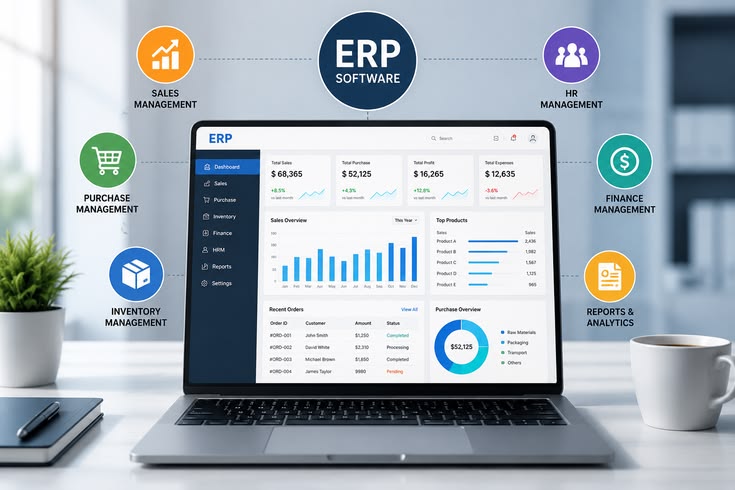
ERP stands for Enterprise Resource Planning. ERP and Business Management Software help businesses connect different departments and manage important operations within an organised digital environment. In addition, these systems make it easier to coordinate business activities and access important information.
For example, a business can use ERP software to manage accounting, inventory, sales, purchases and employee records.
Instead of entering the same information into several applications, authorised staff can work with connected business data. As a result, businesses can reduce duplicated work and improve information management.
According to Microsoft’s explanation of ERP systems, ERP solutions help organisations integrate business processes and improve operational visibility. Consequently, businesses can make better use of their resources and improve coordination between departments.
What Is Business Management Software?
Business management software helps companies organise their everyday activities. Depending on the system selected, it can manage customers, projects, tasks, finances, employees and business reports.
For example, a company can use it to track customer enquiries, assign tasks to employees and monitor its progress towards business goals.
Furthermore, ERP software is one type of business management solution. However, not every business management tool includes all the features of an ERP system. Therefore, businesses should understand their operational requirements before choosing a particular solution.
What Can ERP and Business Management Software Do?
1. Manage Finances
Accounting features help businesses record income, expenses, invoices and payments. As a result, it becomes easier to monitor financial performance and prepare reports.
Additionally, organised financial records can help business owners understand their expenses, track outstanding payments and make more informed financial decisions.
2. Track Stock and Inventory
Inventory management helps businesses monitor available products, record stock movements and identify when items need to be reordered.
For example, a retail shop can use inventory software to monitor available products and identify items that are running low.
Consequently, this can help businesses reduce stock shortages, improve inventory planning and maintain better control over their products.
This is especially useful for shops, wholesalers and businesses that sell physical products.
3. Manage Customers and Sales
Customer management tools help businesses store customer details, follow up on enquiries and track sales opportunities.
Furthermore, these tools allow employees to organise customer information and monitor interactions throughout the sales process.
Consequently, businesses can improve communication, identify potential sales opportunities and build stronger customer relationships.
4. Organise Employees and Tasks
Depending on the system, employee management features can help organise staff records, attendance, leave and responsibilities.
In addition, task management tools help teams track assignments and deadlines. This makes it easier for managers to monitor progress and distribute responsibilities.
As a result, employees can coordinate their activities more effectively and complete assigned tasks within the expected timelines.
5. Generate Business Reports
Business reports help managers understand sales, expenses, inventory and other important activities.
Moreover, these reports provide useful information that can help businesses identify operational challenges and monitor performance.
With accurate information, business owners can identify problems and make more informed decisions. Ultimately, this supports better business planning and resource management.
Why Should Kenyan Businesses Use Business Management Software?
Businesses in Kenya operate in a competitive environment where good organisation and customer service matter. Adopting ERP and Business Management Software can help Kenyan organisations streamline operations, improve information management and support more informed business decisions.
Furthermore, using appropriate software can help organisations:
- Reduce repetitive manual work.
- Keep business records organised.
- Improve communication between departments.
- Monitor stock, sales and expenses.
- Save time when preparing reports.
- Make better-informed business decisions.
For example, a business that previously used separate spreadsheets to manage sales, stock and customer information may benefit from an integrated system.
As a result, employees can access relevant information more efficiently and spend less time handling repetitive administrative activities.
However, the benefits depend on selecting the right software and training employees to use it correctly. Therefore, businesses should consider both their current requirements and future growth when choosing a system.
How Softlink Options Can Help
Choosing business software can be challenging, especially when an organisation is unsure which solution it needs.
Softlink Options provides technology services for businesses. Additionally, organisations interested in ERP and business management solutions should discuss their requirements with the company to identify the most suitable available option.
Before selecting a solution, consider the following questions:
- Do you struggle to track sales and expenses?
- Is managing stock becoming difficult?
- Do employees use different systems to record information?
- Do you need better customer records?
- Would automated reports help you make decisions?
By answering these questions, businesses can identify their operational challenges and determine which software features would be most useful.
Furthermore, understanding these requirements helps organisations avoid investing in unnecessary features.
Explore Softlink Options’ website at https://softlinkoptions.co.ke/ to learn about its services and enquire about suitable business solutions.
ERP Software vs Business Management Software
Although the terms are related, there is a simple difference.
ERP software connects important business functions, such as finance, stock and purchasing, within an integrated system.
On the other hand, business management software is a broader term for tools that help manage specific activities, such as customer relationships, projects or employee tasks.
For instance, a small business may only need customer management software, while a larger organisation may require an integrated ERP system to coordinate several departments.
Therefore, the right choice depends on your business size, budget and operational needs.
Frequently Asked Questions
Is ERP software suitable for small businesses?
Yes. Some ERP solutions are suitable for small businesses. However, the important thing is to choose a system that matches the organisation’s needs and budget.
Does business management software replace employees?
No. Instead, it helps employees complete tasks more efficiently, organise information and reduce repetitive work. Nevertheless, people are still needed to make decisions and manage operations.
Is ERP software expensive?
Costs vary depending on the software, number of users, features, implementation and ongoing support. For this reason, businesses should request a quotation based on their specific requirements before making a decision.
Does every business need ERP software?
Not necessarily. A small business may only need accounting, inventory or customer management software. In contrast, a larger organisation with connected operational needs may benefit from a more comprehensive ERP system.
Ultimately, selecting the right software depends on understanding your business processes and identifying the areas where technology can make the greatest difference.
Conclusion
ERP and business management software help businesses organise their operations, manage information and improve efficiency.
From tracking stock to managing finances and customers, the right solution can make daily activities easier and provide useful insights for business growth.
Ready to improve how your business operates?
Visit Softlink Options to explore its technology services and enquire about business management solutions suited to your organisation.
Softlink Options — supporting businesses through technology.